L.O.L. Surprise! Disco House
- 4.0
- Rating
- 10.00M
- Installs
- Free
- Price

 Analysis by App-foxy
I went into L.O.L. Surprise! Disco House expecting a simple dress-up game, but its appeal is broader: it turns a bright dollhouse into a small playground for unboxing, styling, pet care, and short creative activities. The presentation is aimed clearly at children, yet the best way to understand it is not as a traditional level-based game. It is more like a collection of playful rooms where the child decides what to do next.
That open-ended structure is important. There is no pressure to master complicated controls or follow a demanding story. Instead, the game builds its mood through colorful dolls, a lively home setting, outfits, accessories, and cute pets. I found the experience most enjoyable when treated as a few minutes of imaginative play rather than a game session with a clear beginning and end.
Developed by TutoTOONS, this free educational game is suitable for Everyone and runs on Android devices using version 6.0 or later. It has reached over ten million installs and holds an average rating of 3.9 from around sixty-seven thousand ratings, which suggests a large audience but also a mixed experience for some families. The game is free to start, with optional purchases ranging from $1.49 to $159.99 per item, so an adult should check the purchase setup before handing over the device.
You May Also Like

 Blood Strike: 2.5 Anniversary
Blood Strike’s Loadouts Turn Every Drop Into a Tactical Gamble
A close look at Blood Strike’s custom loadouts: how fast access to signature weapons reshapes its battle royale rhythm, rewards preparation, and narrows the gap between fights.

 Pandora - Music & Podcasts
Pandora’s Music Is Easy to Start, but Harder to Recover
Pandora’s strength is its low-effort path from a seed to a station. Its weak spot is how much confidence it asks you to place in connection, setup, and quiet recovery.

 8 Ball Pool
 Is Built on Rivalries, Rematches, and Routine
A close look at the rivalries, rematches, shared routines, and unanswered safety questions that turn a quick pool match into a persistent mobile community.

 Samsung Music
’s Quiet Strength Is Playing What You Already Own
Its reach comes less from spectacle than from dependable access to a personal library. That simplicity is both the app’s strongest retention engine and its ceiling.

 AccuWeather: Weather Radar
AccuWeather Review: A Quick, Clear Forecast for Everyday Decisions
For everyday plans, the best forecast is the one you can understand quickly. AccuWeather makes rain timing, radar, and local conditions easy to act on, with a few trade-offs.

 Hill Climb Racing
Why Hill Climb Racing Still Turns Crashes Into One More Run
A tiny car, a bumpy hill and one more upgrade: Hill Climb Racing keeps resurfacing because its simple chaos makes every near-miss feel personal.
More From Our News Desk



A colorful first impression built around choice
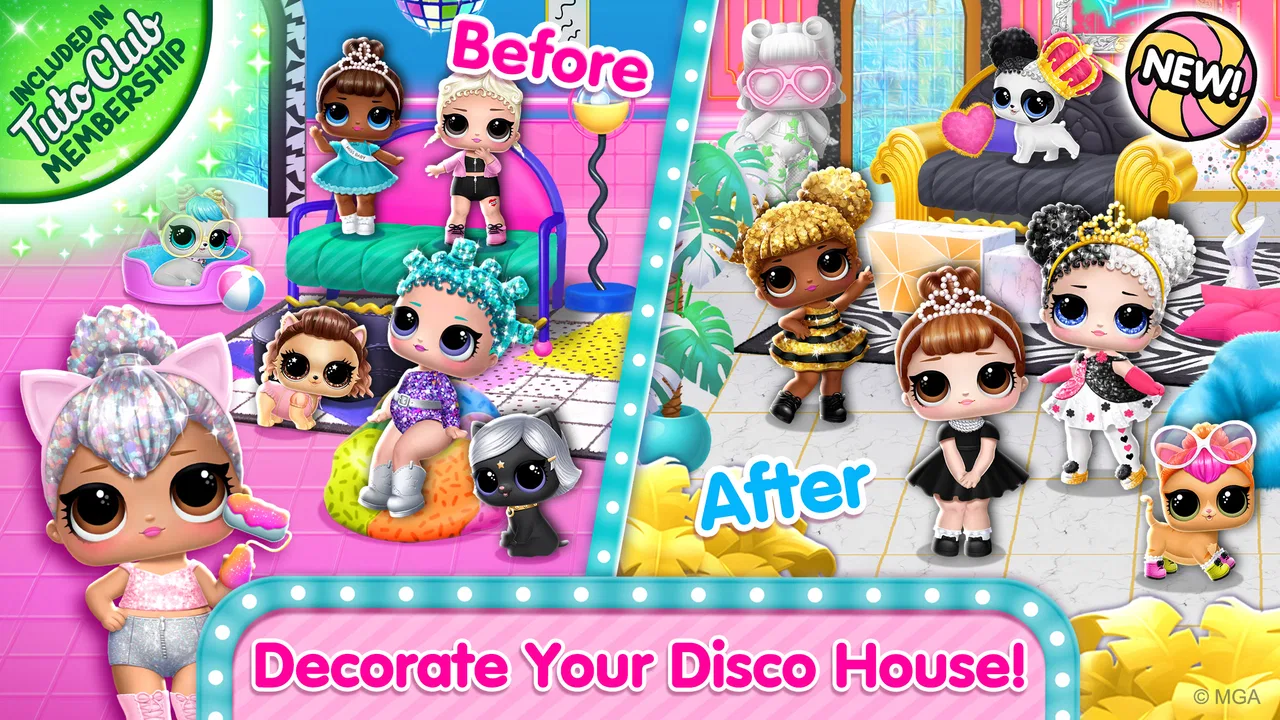
The opening impression comes from the visual language rather than from a complicated tutorial. The dollhouse feels deliberately cheerful, with a strong emphasis on bright colors, recognizable fashion play, and objects that invite tapping. The Disco House setting gives the game a party-like identity, but it still functions as a familiar home where children can move between different kinds of activities.
I like that the setting gives each action a natural place. Dressing a doll feels connected to the bedroom or wardrobe area, pets belong in the domestic space, and unboxing fits the idea of discovering something new inside the house. This makes the game easier for younger players to understand than a menu-heavy educational title. They can often guess what an object is for simply by looking at it.
The first few minutes are also a useful test of whether this is the right kind of game for your child. If they enjoy arranging dolls, selecting clothes, and exploring rooms without needing a score, the structure should feel welcoming. If they prefer racing, puzzles with clear answers, or action with constant goals, the slow and decorative approach may feel empty.
One practical strength is that the game supports short visits. A child can open it while waiting at a doctor's office, choose an outfit, interact with a pet, and stop without losing the point of the session. That makes it more flexible than an educational game built around long lessons. The trade-off is that progress may feel less meaningful to children who want levels, achievements, or a visible sense of completion.
The dollhouse works as a visual instruction system
The art direction does more than make the game attractive. It helps communicate the available activities. Large, expressive objects and strongly separated colors make the rooms readable, while the dolls and pets act as visual anchors. In my experience, this kind of design reduces the need for an adult to explain every button.
That does not mean every interaction will be obvious immediately. A young player may still tap around to discover what can be changed or moved. However, that exploration is part of the intended pleasure. The game rewards curiosity with small visual changes rather than with difficult challenges, so the learning comes from understanding how the house responds.
The visual style is especially effective for children who enjoy pretend play. A child can make a doll look ready for a party, change the mood of a room through decoration and clothing choices, then shift attention to a pet. Those choices are simple, but they create a basic loop of imagining, changing, and observing.
Unboxing is exciting, but it can shape expectations
The unboxing element gives the game a sense of surprise. It creates a reason to return to the rooms and see what might be available, while also fitting the collectible personality associated with the L.O.L. Surprise! brand. For a child, opening something can be as entertaining as using it afterward.
Parents should pay attention to how their child responds to that loop. The discovery feeling can encourage creativity when the new item becomes part of a dress-up scene. On the other hand, a child who focuses only on obtaining the next item may find the creative side less satisfying. I would frame unboxing as one ingredient in the play experience, not as the main reason to keep tapping.
This is also where the optional purchase range matters most. The game is free, but some items can cost substantially more than a small casual purchase. I would set expectations before play and make sure the device's purchase controls are handled by an adult. That is not a criticism of the art direction; it is simply an important part of deciding whether the game belongs on a family device.
How the world, sound, and pacing work together
I found the atmosphere most useful as a gentle cue for imaginative play: the disco-themed rooms make dressing a doll feel like preparing for a little event, while the relaxed pace leaves space for the child to decide what that event is. For a quieter or more focused session, I’d mute the device and offer a simple theme, such as choosing a look for a celebration. That balance leads to the practical question of who is most likely to enjoy this kind of open-ended play.
A setting designed for playful performance
The Disco House name gives the environment a clear mood: this is a place for dressing up, showing off a look, and making ordinary dollhouse activities feel like a little event. The house is not presented as a realistic home simulation. It is a stage-like space where fashion, pets, and decoration can sit together without needing a serious explanation.
That choice keeps the experience coherent. The dolls are not just characters waiting for instructions; they are part of the visual performance. Clothing and accessories become a way to express a theme, while the rooms provide context for the scene. Even when the underlying action is as simple as choosing an item, the presentation encourages the child to imagine what the doll is doing.
I found this more successful than a generic dress-up screen because the house gives the choices somewhere to live. A selected outfit feels more useful when it can be shown in a room or alongside a pet. The environment turns customization into a small story, even if the child invents that story independently.
The limitation is that the world is more decorative than deep. Children looking for a detailed narrative, character development, or a large map to explore will not find that here. The setting supports pretend play, but it does not replace a story-driven adventure. That distinction is worth making before downloading it for an older child.
Sound supports the mood without becoming the whole game
The disco-inspired identity naturally suggests a lively audio atmosphere. In use, the sound works best as a layer that makes the rooms feel active and celebratory while the child changes dolls and explores objects. It helps the game feel like a themed play space rather than a silent wardrobe tool.
What matters most is how the sound interacts with pacing. The game does not need a dramatic soundtrack to keep attention because the visual changes provide the immediate feedback. A child can make a choice, see the doll or room respond, and continue at their own speed. That keeps the experience approachable for younger players who may not want a fast rhythm challenge.
Families who prefer quiet play should still treat sound as part of the setup. A child may enjoy the energy more with audio enabled, while a parent may want the device muted in a waiting room or before bedtime. The game remains understandable through its visual design, so muting it does not remove the central dress-up and dollhouse appeal.
The sound also helps distinguish this title from calmer educational apps. Many learning games use soft narration, letter sounds, counting exercises, or structured musical repetition. This one uses a more social, fashion-oriented mood. It may be a better fit for creative expression than for parents specifically seeking early literacy or numeracy practice.
Pacing favors self-directed sessions
The pacing is gentle because the player controls the order of activities. There is no need to rush from one task to another, and the child can spend time with a doll, switch to a pet, or simply explore the house. That freedom makes the game accessible, but it also means the experience depends heavily on the child's imagination.
A realistic use case is a child who has ten quiet minutes after school. They might choose a party outfit, arrange a doll in a room, interact with a pet, and then stop when the scene feels finished. The game works well in that moment because it does not demand a long commitment or punish the player for leaving quickly.
For a longer session, an adult can add a simple creative prompt: create an outfit for a birthday, make a room ready for a dance, or choose a look that matches a pet. These prompts reveal a less obvious strength of the game. It can become a starting point for storytelling instead of remaining a sequence of taps. The child supplies the narrative that the game itself does not heavily impose.
Still, the same flexibility can become repetition. Once a child has tried the available styling and room interactions, they may want a stronger reason to return. Players who need missions, escalating difficulty, or collectible goals with clear completion markers may eventually prefer a more structured alternative.
The mechanics fit the audience, but not every learner
The core mechanics are easy to approach: explore a dollhouse, discover items, dress dolls, and engage with cute pets. These activities fit the Everyone age rating because they are gentle and based on observation, selection, and pretend play rather than combat or difficult competition.
There is educational value here, although it is informal rather than lesson-based. Children practice making choices, noticing visual differences, combining colors and clothing, and creating a sequence of pretend events. They also learn the basic relationship between an object and its context: an outfit changes a doll's appearance, while a room gives that appearance a setting.
I would not choose this as a replacement for a focused preschool learning app. It does not offer the same direct practice as a title centered on phonics, counting, shapes, or memory exercises. Its educational category makes sense through creative and exploratory play, but parents should match it to the child's goal instead of assuming that every game labeled educational teaches academic skills in the same way.
Compared with a conventional dress-up app, this game benefits from the house and pet elements. There is more to do than selecting clothes against a plain background. Compared with a traditional virtual pet game, it offers more fashion and interior context but less emphasis on routine care and long-term responsibility. Compared with a storybook app, it gives the child more control but provides fewer fixed narrative beats.
That comparison points to its best audience: children who like mixing activities and inventing scenes. It is less suitable for someone who wants one deep mechanic developed over many hours. The game is broad and accessible, not specialized.
Three useful ways to get more from the game
- Use themed play sessions: Instead of asking a child to keep playing, give the dollhouse a small purpose such as preparing for a party or creating a pet-friendly room. This turns free exploration into a manageable creative task without adding pressure.
- Separate discovery from collecting: Encourage the child to use an item in a scene after unboxing it. That simple habit shifts attention from opening rewards to combining clothing, dolls, pets, and rooms.
- Use it as a visual storytelling prompt: Ask who the doll is meeting, why the outfit was chosen, or what the pet is doing. The game supplies the setting and props, while the child practices sequencing and descriptive language.
These approaches also expose the game's main trade-off. Its mechanics are not demanding enough to carry every session by themselves, but they are open enough to support conversation and imagination. Adults who participate occasionally may find more value than those expecting the app to entertain independently for long periods.
What to know before installing
The game is free to download, which makes trying it straightforward, but the optional purchase range deserves attention. I would install it on a device with purchase protections already configured and explain clearly which items are available without spending. This is especially important because the unboxing theme can make new content feel immediately tempting.
The current version is 2.5.449, and the game requires Android 6.0 or later. Those details matter if you are installing it on an older family tablet. On a compatible device, the visual style should be easy to recognize, but performance and comfort will still depend on the hardware and screen size. A larger screen can make the dollhouse easier for small hands to explore.
The age rating of Everyone makes it suitable for a broad audience, but age suitability and personal preference are not identical. A very young child may need help understanding the available interactions, while an older child may find the simplicity limiting. I would let the child's interest in dolls, fashion, pets, and pretend play guide the decision more than the rating alone.
It is also worth deciding whether you want a game that encourages independent play or shared play. The controls are approachable enough for children to explore, but the strongest use can involve an adult asking questions or suggesting a scene. If you want a fully structured activity that teaches one measurable skill, another educational title will probably serve you better.
My atmosphere verdict
After spending time with it, I see L.O.L. Surprise! Disco House as a cheerful creative playroom rather than a conventional game with a campaign. Its art direction gives the dollhouse a recognizable party mood, its sound supports that energy, and its relaxed pacing lets children move between styling, discovery, pets, and room-based imagination.
The experience succeeds when the player enjoys making choices for their own sake. A new outfit is not valuable because it unlocks a difficult stage; it is valuable because it changes the scene and gives the child another detail to play with. That can be genuinely satisfying for children who already enjoy dolls and pretend stories.
My reservations are equally clear. The free-to-play structure requires adult awareness, the open format may become repetitive, and the educational benefit is creative rather than curriculum-focused. Children who want action, puzzles, progression, or a substantial story should skip it in favor of a game built around those priorities.
For the right child, though, the combination is appealing. TutoTOONS has made a colorful space where unboxing, dress-up, pets, and a disco-themed home reinforce one another instead of feeling like unrelated mini-games. I would recommend it as a short-session creative game, with purchase settings checked first and with realistic expectations about its depth. Its strongest feature is not complexity; it is the way the setting gives simple choices a playful mood.
FAQs for L.O.L. Surprise! Disco House
01What is the main objective of L.O.L. Surprise! Disco House?
L.O.L. Surprise! Disco House is a vibrant simulation game where players can explore and customize their own disco-themed house with L.O.L. Surprise dolls. The game focuses on creativity, allowing players to design rooms, throw parties, and interact with various characters to enhance their virtual experience.
02Is L.O.L. Surprise! Disco House suitable for all ages?
While L.O.L. Surprise! Disco House is designed primarily for children, particularly fans of the L.O.L. Surprise franchise, it can be enjoyed by anyone who loves creative and interactive gameplay. Parents should review the app's content to ensure it aligns with their child's age and interests.
03Does L.O.L. Surprise! Disco House require an internet connection?
Yes, an internet connection is required to access all features of L.O.L. Surprise! Disco House. This includes downloading updates, accessing new content, and participating in online events. Ensure a stable internet connection to enjoy uninterrupted gameplay.
04Are there in-app purchases in L.O.L. Surprise! Disco House?
L.O.L. Surprise! Disco House includes in-app purchases that allow players to buy additional content, such as exclusive dolls, decorations, and other customization options. These purchases enhance the gaming experience but are not necessary to enjoy the core features of the game.
05How can I ensure a safe gaming experience for my child on L.O.L. Surprise! Disco House?
To ensure a safe gaming experience, monitor your child's in-game interactions and set up parental controls to manage in-app purchases. Encourage open communication about online behavior and maintain oversight of the time spent in the app to balance play with other activities.
Pros
- Engaging and colorful graphics.
- Interactive mini-games for kids.
- Easy-to-navigate interface.
- Regular updates with new content.
- Safe environment for children.
Cons
- In-app purchases can add up.
- Requires internet connection.
- Limited features without payment.
- Might not appeal to older kids.
- Occasional minor bugs.

L.O.L. Surprise! Disco House
Gallery